Shay Krahn — a DM running a full plane-hopping campaign, builder of the 5,300+ monster Field Guide, and on Chaosium's media list.
Tabletop games, books and gear, given the full commercial treatment: what it is, what makes it great, shown at its best. And one rule above all — nothing earns a verdict until it has been opened, read cover to cover, and played at a real table. Completed reviews carry their verdict. Everything else is labelled exactly where it stands.
Shay's DM shelf — Witchlight on the left, Tales from the Yawning Portal and Journeys Through the Radiant Citadel right beside it.
Now reviewingThe Wild Beyond the Witchlight — Wizards of the Coast◆Vaesen — Free League◆Big Book of Battle Mats — Loke Battle Mats◆Cypher Character Rulebook — Monte Cook Games
Start here · Review started
Where the reviews began
The Wild Beyond the Witchlight is the book Shay started these reviews with — gifted to him, and first off his own DM shelf. The review is started and the verdict is still to come: no verdict until it has been read cover to cover and played at a real table.
★ Starting here — review startedOriginal feature illustration
Wizards of the Coast · Dungeons & Dragons
The Wild Beyond the Witchlight
A Feywild Adventure — the carnival is in town, and something has been stolen.
It starts the way every good Feywild story should: with a ticket. The Witchlight Carnival rolls in once every eight years, run by Mr. Witch and Mr. Light — and the last time it came, something precious was taken from you. Follow the trail past the carnival gates into Prismeer, the Domain of Delight, where the archfey Zybilna lies frozen in time and three hags of the Hourglass Coven have carved her realm into Hither, Thither and Yon. Whimsy on the surface, real danger underneath — and a heist, a rescue and a palace waiting at the end of it.
A full D&D campaign, levels 1 to 8 — from the carnival midway to the Palace of Heart's Desire
Famous for the no-fight path — every encounter in the book has a way through that isn't combat, if the party is clever, kind or quick enough to find it
Two hooks built into the book — play a Witchlight Hand who works the carnival, or a Feylost who lost something to it as a child; fairies and harengon join the playable races
Made for Shay's table — his campaign already lives in the Feywild, so this one gets read against real play, not just on the page
From Shay's own DM shelf — review started, verdict to come
Featured reviews · Completed
The completed reviews
Full Roadshow reviews, done properly: read cover to cover, played at a real table, and recorded — the written review, the audio review and the talk show episode, all in one place.
A prison break into the Underdark — and a war against the demon lords.
23 November 2026
The verdict“A magnificent, demanding Underdark epic — the best world in early fifth edition, wrapped around the heaviest prep load of its era. Four stars out of five.”
Best for: Experienced DMs who love improvising inside a rich sandbox
▶ Hear the reviewOut of the Abyss — the full review · Narrated by Walter (Husky Campfire) · 21 minutes 47 seconds
The written review below, in full: the verdict, how the campaign runs, the fellow prisoners, the strengths, the weaknesses, and who the book is for.
▶ The talk show episodeNPC Talk Show — Stool, Derendil and Vizeran DeVir · 11 minutes 5 seconds · 23 November 2026
Dr. Dungeons sits down with Stool, Prince Derendil, and Vizeran DeVir, to talk about the Underdark in this book.
See more — read the full reviewSee less
From Shay's own DM shelf. An honest read-through review: this is an assessment of the book as published, not a report of a campaign run at Shay's table.
THE BOOK AT A GLANCE
Publisher / line: Wizards of the Coast, the “Rage of Demons” storyline (developed by Green Ronin under commission). First published: September 15, 2015. Format: 256-page hardcover campaign adventure, 17 chapters plus appendices. Levels: 1–15. Setting: The Underdark of the Forgotten Realms. Story hook (in the design team's own framing): the Underdark reimagined as a dark Wonderland — a deranged, dreamlike place you fall into, full of strange characters, where the longer you stay the more the madness gets into you too.
What it is
Most fifth edition campaigns start with a quest. This one starts with a cage. The characters wake as prisoners of the drow in the outpost of Velkynvelve, stripped of their gear, awaiting transport to Menzoberranzan — and the entire first half of the book is one long, desperate escape across an alien underground world, pursued the whole way. Then, just when the party finally reaches the surface and breathes again, the book turns around and asks them to go back down — this time as the spearhead of an expedition, because what they glimpsed on the way up was the leading edge of a demonic incursion: demon lords loose in the Underdark, summoned by a drow archmage's ritual gone (or gone exactly) wrong.
That two-act shape — escape, then return — is the boldest structural choice in any early fifth edition campaign, and everything good and everything difficult about this book grows out of it.
The verdict
“A magnificent, demanding Underdark epic — the best world in early fifth edition, wrapped around the heaviest prep load of its era. Four stars out of five.”
— Shay Krahn, The Realms Roadshow · From Shay's own DM shelf
How the campaign runs
Act one — the escape (roughly levels 1–7/8).
Chapter 1, Prisoners of the Drow
The Velkynvelve prison break, run with a large cast of fellow prisoners (see below), a cruel priestess overseer in Ilvara Mizzrym, and a demonic interruption that can crack the outpost open at exactly the wrong — or right — moment.
Chapter 2, Into Darkness
The travel engine for the whole first half — navigation, foraging, pursuit by Ilvara's drow, encounter tables, strange fungi, and the book's madness rules, which are the thematic spine of the campaign.
Chapters 3–6, the great locations, visitable in flexible order
The kuo-toa port of Sloobludop on the Darklake, where a schism in fish-god worship delivers the party's first full sighting of Demogorgon rising from the water; the duergar city of Gracklstugh, a paranoid industrial forge-city with a derro conspiracy, a stonespeaker seer, and an obese, indolent red dragon, Themberchaud, as its living furnace; Neverlight Grove, the gentle myconid haven already rotting from inside under Zuggtmoy's influence; and Blingdenstone, the deep gnome city fighting a losing war against oozes and the Pudding King, an agent of Juiblex.
Chapter 7, Escape from the Underdark
The way out, with the drow pursuit coming to a head.
Act two — the return (roughly levels 8–15).
Chapter 8, Audience in Gauntlgrym
The surface world answers. In the dwarven stronghold of Gauntlgrym, under King Bruenor Battlehammer, the party is given allies, resources, and an expedition to lead back down.
Chapters 9–11, the deepening investigation
The trading post of Mantol-Derith and its double-dealing factions; the descent renewed; and Gravenhollow, a stone giant library outside time itself, where echoes of past and future visitors let the party piece together the truth — that the archmage Gromph Baenre's ritual in Menzoberranzan tore the doors open.
Chapters 12–16, the wizard's bargain and the gathering
The exiled drow archmage Vizeran DeVir offers the only real solution on the table — a ritual, built around a talisman called the Dark Heart, that will summon every demon lord to one place and let them destroy each other. The party must fetch him the components: through the Wormwrithings (purple worm tunnels and a banished prince of deception's prison-gem), the Labyrinth of the minotaur lords (Yeenoghu hunting, Baphomet's maze, and the ancient Maze Engine), into Menzoberranzan itself to rob Gromph's own grimoire, and to the Fetid Wedding, where Zuggtmoy means to wed the vast fungal intelligence Araumycos in a ceremony that would hand her the Underdark.
Chapter 17, Against the Demon Lords
The ritual fires, the demon lords are dragged together and tear into each other — and the party must finish off whoever is left standing. It is one of the great set-piece finales of the edition, because the book has the nerve to let its villains do most of the work and make the party the decisive margin rather than the main event.
The demon lord roster is the full classic court: Demogorgon, Zuggtmoy, Juiblex, Yeenoghu, Baphomet, and Fraz-Urb'luu all appear in play, with Orcus and Graz'zt woven through the background and Lolth's hand visible behind the drow politics. Full stat blocks for the demon lords are in the book's appendices, alongside Underdark gear, magic items (including the sentient longsword Dawnbringer, a blade of sunlight hidden in the dark, which may be the single best-placed magic item in any fifth edition campaign), and new creature statistics.
The fellow prisoners — the book's heart and its heaviest lift
Chapter 1 introduces roughly ten prisoner NPCs who can escape alongside the party: Buppido the derro, whose politeness conceals something monstrous; Eldeth Feldrun, the steadfast shield dwarf scout; Jimjar, the compulsive deep gnome gambler; Prince Derendil, a quaggoth who insists, with total courtesy and total conviction, that he is an elven prince under a curse; Ront, the belligerent orc; Sarith Kzekarit, the surly drow who knows the way and trusts no one; Shuushar the Awakened, the kuo-toa monk who has renounced violence in the middle of a world built on it; Stool, the myconid sprout who speaks in rapport spores and simply wants to go home; and Topsy and Turvy, twin deep gnome wererats with a secret. Several of them are among the most beloved NPCs in fifth edition — Stool and Shuushar especially — and the device is genuinely brilliant: the party's first community in the Underdark is a travelling company, and every death, betrayal, and homecoming lands.
It is also, honestly, a lot. Ten NPCs with secrets, agendas, and destinations, introduced in the first session, on top of captivity, escape planning, an unfamiliar setting, and pursuit mechanics. How a given table experiences this book is decided right there.
STRENGTHS
What it does well
The Underdark itself. No fifth edition book builds a stranger, more coherent alien world: phosphorescent fungi forests, a subterranean lake the size of a sea, cities that are genuinely cultures rather than surface towns in caves. As an Underdark sourcebook alone, it earns its shelf space — DMs strip-mine its locations for home campaigns constantly.
Atmosphere with mechanics behind it. Madness is not set dressing here; it is a system the campaign keeps touching, and the demon lords corrupt places in ways the party can see worsening as they travel. The horror escalates because the rules keep score.
The two-act structure. Escape-then-return gives the campaign a midpoint triumph most books never risk, and makes the second descent feel earned: the party goes back down as somebody.
The locations. Sloobludop's god-war, Gracklstugh's paranoia, Neverlight Grove's doomed gentleness, Blingdenstone's siege — each is a campaign seed in itself, and the flexible ordering of the first half is real sandbox design, not the appearance of it.
The finale. Summoning the demon lords to destroy each other, then finishing the survivor, is a climax that respects both the villains' scale and the party's place in the story.
Vizeran DeVir. A villain-adjacent ally the party must trust because there is no alternative — the best kind of NPC bargain, and the moral engine of the whole second half.
WEAKNESSES
Where it falls short
The NPC glut is real. Running the full prisoner cast well is a performance and bookkeeping load that lands in session one, when the DM can least spare the attention. Many tables will need to trim the cast, and the book does not help them decide who to cut.
Prep and organization. The campaign's moving parts — pursuit, travel days, faction states, which demon lord has corrupted what — are scattered across chapters with no strong campaign overview to hold them together. It rewards a DM who reads the whole book first and builds their own tracking tools, and it punishes one who tries to run it cold, chapter by chapter.
Travel can become routine. The first half asks for a great deal of journeying, and if the DM runs every day of it at full procedural weight, the alien wonder curdles into accounting. The book offers ways to compress; using them is close to mandatory.
The midpoint motivation gap. “You escaped — now go back” is a harder sell at some tables than the book admits. The Gauntlgrym chapter gives the party status and support, but the emotional work of turning escapees back into delvers is left largely to the DM.
Maps and layout. The maps are evocative but often small on the page, and the art layout drew complaints from the start. For a book this dependent on strange spaces, the cartography does not always carry its share.
Not a first campaign. For a new DM, or a group that wants a clear quest arrow, this book's openness reads as sprawl. That is a mismatch problem, not a quality problem — but it is the most common way this book fails at real tables.
What the wider world said — and where we land
Published reception was strong but divided in an unusually consistent way. Boing Boing called it probably the best adventure yet seen for the new edition at the time, while flagging the NPC glut and poor art layout in the same breath. DieHard GameFan judged it one of the best campaigns D&D had produced in at least a decade — with the explicit condition that its success depends heavily on the DM's organization and improvisation. GamingTrend scored it 90 and praised the exotic, challenging Underdark. Kotaku's play account is the famous dissent: a table whose first-session enthusiasm drowned under the sheer number of NPCs, hooks, and systems, and never picked the book back up. It was a Judges' Spotlight winner at the 2016 ENnie Awards. Community reviewers since have mostly converged on the same shape: an outstanding first half, a good-but-thinner second half with a great climax, and a book that works as an Underdark sourcebook even for DMs who never run it whole.
Where we agree: with the consensus on both ends — the world, the locations, and the finale are top-tier, and the NPC load, prep burden, and travel pacing are the real costs. Where we part company: slightly with Kotaku's conclusion. The paralysis it describes is a session-one presentation problem the DM can solve — introduce the prisoners in waves, let half the cast matter later — whereas the review treats it as the book's fixed nature. The flaw is real; it is just more fixable than the harshest takes suggest, and the payoff for fixing it (Stool's homecoming, Shuushar's counsel, Derendil's dignity) is some of the best emotional material in the edition.
Who should skip it
Brand-new DMs running their very first campaign — start somewhere that holds your hand; come back to this one with a campaign under your belt.
Tables that want a single clear villain, a marked quest path, and low bookkeeping.
Groups whose players will chafe at starting captured and disarmed, or at survival-and-travel play generally.
Anyone shopping for a short campaign — played in full, this is a long-haul book, the better part of a year for most weekly tables.
The bottom line
Out of the Abyss is the most ambitious campaign of early fifth edition: a prison break that becomes a guided tour of the game's strangest world, that becomes a war against the demon lords themselves. It asks more of its DM than almost any of its peers — more prep, more improvisation, more cast management — and, run by a DM willing to pay that price, it pays back more than almost any of them too.
Verdict: Four stars out of five. Buy it if you are an experienced DM who wants a world, not just a plot. Respect it, prepare for it, and trim its cast without mercy — what is underneath is one of the great ones.
Disclosure: From Shay's own DM shelf.
Wizards of the Coast · Dungeons & Dragons · 2025
Forgotten Realms: Adventures in Faerûn
Five regions, fifty-one adventure seeds — a toolbox for Realms DMs.
23 November 2026
The verdict“Worth the money for a DM who builds — a rich Realms toolbox of regions and adventure seeds, not a box of finished adventures.”
Best for: DMs running a Forgotten Realms campaign who grow their own sessions from strong seeds
▶ Hear the reviewForgotten Realms: Adventures in Faerûn — the full review · Narrated by Walter (Husky Campfire) · 19 minutes 56 seconds
The written review below, in full: the verdict, what the book actually is, the five regions, the strengths, the weaknesses, and who the book is for.
▶ The talk show episodeNPC Talk Show — Elminster, Minsc and Boo, Jarlaxle and Valindra Shadowmantle · 13 minutes 3 seconds · 23 November 2026
Dr. Dungeons sits down with Elminster, Minsc and Boo, Jarlaxle, and Valindra Shadowmantle, to talk about the Realms in this book.
See more — read the full reviewSee less
From Shay's own DM shelf. Basis of this review: an honest read-through of the published book. This review does not claim table experience with this book — it has not been run at Shay's table, and nothing below pretends otherwise.
THE BOOK AT A GLANCE
Book:Forgotten Realms: Adventures in Faerûn (Wizards of the Coast). Type: Dungeon Master–focused setting and adventure expansion for Dungeons & Dragons (2024 rules). Released: November 11, 2025 · 288 pages · Print price at release: $59.99 USD (digital and bundle options also offered). Companion volume:Forgotten Realms: Heroes of Faerûn (the player-facing book).
What the book actually is
Adventures in Faerûn is the DM half of Wizards of the Coast's two-book return to the Forgotten Realms, built for the 2024 Player's Handbook and Dungeon Master's Guide. Where its companion, Heroes of Faerûn, gives players subclasses, backgrounds, factions and gods to build characters from, this volume gives the DM places, conflicts and starting points. It is best understood as three books stitched into one cover: a book of short adventures, a five-region campaign guide, and a small treasury of monsters and magic items.
The verdict
“Worth the money for a DM who builds — a rich Realms toolbox of regions and adventure seeds, not a box of finished adventures.”
— Shay Krahn, The Realms Roadshow · From Shay's own DM shelf
Structure and contents
Introduction
What the book is and how to use it.
Chapter 1: Running the Realms
DM advice for running epic fantasy in Faerûn, including how to keep legendary figures from solving the party's problems for them, guidance on weaving character backstories into the setting, and the book's headline content: 51 short, one-page adventures.
Chapters 2–6: Five regional guides
The Dalelands, Icewind Dale, Calimshan, the Moonshae Isles, and Baldur's Gate. Each follows the same useful pattern: campaign advice and tone, the powers (factions, deities, influential NPCs), the dangers, a gazetteer, stories and hooks, live conflicts, a DM's toolbox of tables and region-specific material, region-specific Bastion events, and a framework for running a campaign in that region from low levels all the way up.
Chapter 7: The Lost Library of Lethchauntos
The book's one full adventure, for characters of levels 1 to 3, built around a long-buried library devoted to Mystra and a dangerous grimoire of poisons and spells called the Nathlum. It can be set in any of the five featured regions and is plainly designed as a campaign opener.
Chapter 8: Magic Items
A short chapter of potent, lore-heavy treasures (see below).
Chapter 9: Bestiary
Dozens of new stat blocks (publisher listings put the count in the high thirties; some reviewers counting differently land lower), organised with guidance on where in Faerûn each creature belongs.
Appendix
A map of the continent of Faerûn.
The adventures: seeds, not scripts
The 51 one-page adventures are the book's boldest choice and its biggest argument. Each follows the compact format introduced in the 2024 Dungeon Master's Guide: a situation, a hook, roughly two to three encounters (combat, exploration or social), and a map or a pointer to one. They span levels 1 to 15 and are sorted four ways — by deity, by faction (Harpers, Red Wizards, Zhentarim and their peers), by high magic (an adventure built around a spell or item), and by region.
The honest description is frameworks. The best of them — reviewers repeatedly single out pieces like “Blood Night,” a deadly Baldur's Gate house party tangled up with the Cult of Bhaal, “The Shadow Parliament,” a debate-first adventure, and “The Curse on Humble Hill” — are genuinely clever one-session engines. The weakest are a familiar situation and a fight wearing Realms clothing. And balance is not guaranteed: at least one published playtest account found an Icewind Dale adventure whose summoned Beast of Malar could all but guarantee a total party kill as written. A DM still has to read, judge and adjust. What the format buys you is speed of starting, not freedom from work.
The Lost Library of Lethchauntos is the exception — a complete, multi-session starter adventure with a real mystery spine. It is more linear than the one-pagers, but as an introduction to the Realms' big themes (lost magic, meddling gods, heroism in old ruins) it does its job well.
The five regions
This is where the book earns its shelf space. Each region is deliberately given its own genre:
The Dalelands
Classic heroic fantasy: frontier dales, goblin trouble, dungeon-delving, and the fallen elven city of Myth Drannor looming over everything in the forest of Cormanthor.
Icewind Dale
Survival and supernatural horror in the far north: Ten-Towns, the Reghed camps, Kelvin's Cairn, the Sea of Moving Ice, things thawing out of glaciers that should have stayed frozen. The chapter moves the region forward past Rime of the Frostmaiden rather than just repeating it.
Calimshan
High-magic intrigue in the desert south: scheming genies, cursed artifacts, decadent city-states, and Calimport, the City of Wonders. This treatment is notably more culturally careful than the Calimshan of older editions.
The Moonshae Isles
Seafaring and dark fairy tale: Celtic-flavoured islands, the Earthmother, fey influence bleeding in from the Feywild, and nature-versus-corruption conflict.
Baldur's Gate
Gritty urban fantasy: patriars, guilds, the Dead Three's cults, and a city still living with the aftermath of Descent into Avernus and the events players know from Baldur's Gate 3.
The chapters are not equals. Icewind Dale is the standout almost everywhere this book has been reviewed. The Dalelands and Baldur's Gate are solid. Calimshan and the Moonshaes divide reviewers sharply — some praise Calimshan as the freshest material in the book, others find both chapters thin next to the northern coverage.
People, factions and powers
The regional chapters are populated the way the Realms should be: the Harpers, the Zhentarim, the Red Wizards and the Lords' Alliance moving in the background; the Dead Three — Bane, Bhaal and Myrkul — still poisoning Baldur's Gate; genie powers contesting Calimshan, including the great efreeti Biha Babir in the bestiary; and the familiar faces on the book's own cover — Valindra Shadowmantle, Vajra Safahr, Jarlaxle Baenre, Karlach, and Minsc with Boo. Chapter 1's advice on the setting's famous names is quietly one of the most practical things in the book: Faerûn is full of archmages and chosen of gods, and the book addresses head-on how to keep the adventure on the player characters' shoulders instead of Elminster's.
Creatures and treasures
The bestiary leans regional and flavourful: deep dragons and spirit dragons, phaerimm, the Beast of Malar, aranea, drow of Lolth stat blocks (the classic villainous drow who were absent from the 2025 Monster Manual), cultists of the Dead Three, and horrors flavoured by each region — fungal things in the Dalelands, frost-bound aberrations in Icewind Dale, infernal cultists in Baldur's Gate. Reviewer counts of the chapter differ, and a few low-level entries feel generic, but the high-end and region-tied creatures are the keepers.
The magic items chapter is short — a handful of major Wondrous items rather than a treasury — but the pieces are heavy with lore: the Crown of Horns, Myrkul's cursed relic; the Calimemnon Crystal, a diamond imprisoning a host of genies; the Harper Pin; the Orb of Damara; the Tome of the Dragon; a transforming Mechanical Wonder; and a Windskiff that turns from jewellery into a hovering board. The fair criticism, made by several reviewers, is that the chapter is small and overlaps in part with items also presented in Heroes of Faerûn.
DM tools worth naming
Epic Destinies — an optional framework for privately planning each character's long arc (examples include Heir to a Throne and Pupil of the Archmage), so personal story payoffs can be seeded across a campaign. Ambitious; groups that dislike pre-plotted character arcs will ignore it, and the book survives that fine.
Per-region campaign frameworks — how to run levels 1 to 20 without leaving the region.
DM's toolboxes — encounter tables, environmental effects and hazards per region, including Icewind Dale's arctic survival material and Calimshan's magical contagions.
Bastion events — region-flavoured events that tie the 2024 Bastion rules to wherever the party has settled.
Maps — a generous spread, praised in nearly every review, plus the continental map in the appendix.
STRENGTHS
What it does well
Five genuinely distinct campaign regions, each with its own genre, conflicts and forward-moving lore — not a reprint of old gazetteers.
Icewind Dale chapter is excellent and adds real value even alongside Rime of the Frostmaiden.
Fifty-one adventure seeds plus a complete starter adventure is a lot of campaign fuel in one book, sorted by deity, faction, magic and region so you can find the right level and flavour fast.
Strong maps and presentation throughout.
Practical advice on the Realms' signature problem: a world full of legendary NPCs who must not take over the party's story.
The lore and the mechanics are tied together — adventures grow out of gods, factions and places instead of sitting anywhere.
WEAKNESSES
Where it falls short
The one-page adventures are sketches. A DM expecting to open the book at game time and run with no prep will be disappointed; several need real development, and at least one is dangerously unbalanced as written.
Uneven regions: Calimshan and the Moonshae Isles get less depth than Icewind Dale and the Dalelands.
The magic items chapter is small and partly overlaps the companion volume.
The split-book problem: gods, factions in full, and the rest of the continent live in Heroes of Faerûn. DMs will feel pushed toward owning both, and material is divided between them in ways that mean flipping back and forth.
Long-time Realms hands will find familiar ground — much here refines and updates rather than reveals.
Who should skip it
DMs who want complete, run-it-tonight adventures with nothing to fill in — buy a full adventure anthology or a campaign book instead.
Groups not playing in the Forgotten Realms and not planning to — the book's whole value is Realms-specific.
Players: this is the DM's volume; the player content is in Heroes of Faerûn.
Collectors of deep single-region lore who already own the classic treatments and want revelation rather than a modern, playable update.
How this review compares with the published consensus
The published reception agrees with this review on the big points: the regional chapters and maps are the book's glory, Icewind Dale is the best of them, the one-page adventures are ideas that need a DM's work rather than finished modules, and the two-book split is the structural complaint. Where this review parts company with the harshest critics is on the short adventures themselves: judged as seeds for a DM who enjoys building, they are a feature; judged as products that should run themselves, they fail — and this review grades the book for the DM it was plainly written for. It also parts company with the most enthusiastic deep-dive score by holding back for the thin items chapter and the uneven southern and island regions.
Consensus note: Across published reviews, the shared verdict is that Adventures in Faerûn is the strongest broad look at the Realms in the fifth-edition era — praised for its regions, maps and sheer number of ideas, faulted for shallow one-page adventures, uneven regional depth, and content split across two books.
Disclosure: From Shay's own DM shelf. This is a read-through review; the book has not been run at Shay's table.
Start here★ Review completeReview copies provided by Free League PublishingOriginal feature illustration
Free League Publishing
Vaesen
Nordic Horror Roleplaying — the folklore has teeth.
22 November 2026
By Shay Krahn, Fort St. John, B.C. Review copies of the Core Rulebook (revised edition), the Starter Set, Mythic Carpathia, and City of My Nightmares were provided by Free League Publishing. Narrated audio version: Walter (Husky Campfire).
The verdict“Vaesen is worth your money — I'd recommend them anyway”
Best for: Keepers of gothic folk-horror who like investigation over combat
▶ Hear the reviewVaesen — the four books, in full · Narrated by Walter (Husky Campfire) · 19 minutes 32 seconds
The written review below, in full: the world, how it plays, the Mystery, all four books, the awards record, the honest criticism, and the verdict.
▶ The talk show episodeNPC Talk Show — the voices of Vaesen · 11 minutes · 23 November 2026
Dr. Dungeons sits down with the Neck, the Myling, the Church Grim, the Lindworm, Baba Yaga, and Linnea Elfeklint of the Society, to talk about the world of Vaesen.
See more — read the full reviewSee less
QUICK FACTS
Mythic Carpathia — 136 pages, 16 new vaesen, one new archetype (the Vampire Hunter). Core Vaesen — three 2021 Gold ENNIEs (Best Art – Cover, Best Art – Interior, Best Monster/Adversary). Mythic Britain & Ireland — 2023 ENNIE Product of the Year. City of My Nightmares — 2026 Gold ENNIE, Best Adventure – Long Form. System: the Year Zero Engine (Mutant: Year Zero, Alien, Tales from the Loop). Origin: Johan Egerkrans's Vaesen: Spirits and Monsters of Scandinavian Folklore.
Pull up a chair by the fire, and settle in, because tonight we are doing this properly. Four books landed on Shay Krahn's table up in Fort St. John — review copies provided by Free League Publishing, arranged through Tim Penix at UberStrategist and claimed through DriveThruRPG. No money changed hands, and you will hear the verdict plain at the end, same as always. The game is Vaesen, Nordic horror roleplaying, and Shay has read these books the way he reads everything: cover to cover, pencil in hand, looking for what he can actually use at a real table. And here is the heart of it, before we open a single cover: the information in these books is genuinely good. Not flavour text. Research you can run a game from. I am going to show you why — book by book, creature by creature.
The World
First, the world. Vaesen is set in the nineteenth century, in Scandinavia — the Mythic North, the books call it. The old creatures of folklore never left. The brook horses, the church grims, the things that dance you to death by the water — they are all still out there in the dark woods and the deep lakes. What changed is us. People stopped being able to see them. All except a few: men and women born with the Sight, Thursday's children, the books call them, who still see the world as it truly is. And seeing it, they cannot unsee it. So they organize. They join a Society, devoted to studying the vaesen and protecting people from them — and protecting the vaesen from people, now and then, because the books are honest enough to admit the cruelty runs both ways.
The Society has a history, and the Core Rulebook gives it to you whole. It traces itself back to an Order of Artemis, and to Carl Linnaeus himself — yes, that Linnaeus, the great classifier of the natural world, who in this telling spent his younger years cataloguing things no university would ever print. The Society nearly died out — there is a grim chapter in its past called the Oulu Massacre — and by the time your characters arrive, it is a shadow of itself, being rebuilt almost from nothing under Linnea Elfeklint. Your headquarters is Castle Gyllencreutz, in Uppsala: a real castle, with a library, an observatory, draughty halls, and secrets of its own. You are not wandering heroes. You are investigators with a home, a library, and a duty — and the letters keep arriving, begging for help, from villages where something has gone terribly wrong.
And the North itself is drawn in proper detail. This is a Scandinavia on the hinge of history: the old agrarian world of villages, parishes, and superstition, with the new world of railways, factories, and universities pressing in on it — and the vaesen are retreating and raging precisely because their world is being paved over. There is a chapter on daily life, on travel by coach, boat, and steam train, and a gazetteer of Uppsala to run your home city from. It is the unglamorous groundwork that makes the horror believable when it comes — because a monster in a village only frightens you if the village felt real first.
How It Plays
Now, how does it play? You build your character from one of ten archetypes — the Academic, the Doctor, the Hunter, the Occultist, the Officer, the Priest, the Private Detective, the Servant, the Vagabond, and the Writer. Ordinary people, every one of them, which is rather the point. Each carries a Motivation, a Trauma, and a Dark Secret — something in their past that the gamemaster can lean on when the night gets cold. The system is the Year Zero Engine, the same engine family that powers Mutant: Year Zero, Alien, and Tales from the Loop — so if you have played any of those, you already know the shape of a roll here. The dice are simple and they are cruel. You roll a handful of six-sided dice, built from your attribute and your skill, and every six is a success. Fail, and you may push the roll — muster everything you have and roll again — but pushing always costs you. You take a Condition: physical, like Exhausted or Battered, or mental, like Frightened or Hopeless. Conditions weigh on everything you do afterwards, and when you can take no more, you are Broken. And then there is Fear, because some of these creatures are so wrong that the mind recoils before the body can act. It is a system built for people who investigate first and bleed second, and it suits beginners and veterans alike — ordinary folk, simply taught.
The Mystery
And here is the engine of the whole game: the Mystery. Every adventure in Vaesen follows the same bones, and the Core Rulebook teaches them outright. An Invitation arrives. You make your Preparations back at the castle — research in the library, the right gear, the right questions. You take the Journey, and you Arrive somewhere that does not want you. Then you work the Locations, gathering clues — the book divides them into central clues, the ones the truth hangs on, and peripheral clues, the ones that colour it in. And all the while, a Countdown is ticking: step by step, the situation worsens, until it reaches the Catastrophe — the terrible thing that happens if you are too slow, or too careless, or you never understood what you were facing at all. The Confrontation, when it comes, is not a slugfest. It is the Ritual: the specific, folklore-true act that banishes the creature, binds it, or lays it to rest. Combat is what happens when the investigation fails. Afterwards comes the Aftermath — and then home to the castle, where the campaign game lives: you earn Development Points and spend them on your headquarters, a better library, an infirmary, a seance parlor, contacts in the city, people on staff. The castle grows as the Society grows. It is a whole second game, played between the horrors.
And the castle is not a sanctuary the world politely ignores. The campaign rules include Threats — dangers aimed at the Society itself, gathering between one mystery and the next: rivals, skeptics, and worse things that have marked the Society's name. Every improvement to the castle is bought under a shadow. That is campaign design with a long memory, and it is rarer in this hobby than it ought to be.
Nor does the book leave you to admire the machine without teaching you to build with it. The Mystery chapter ends in a full set of tables — the invitation, the quest giver, the misdeed, the creature, the conflicts, the locations — so a gamemaster can roll up the bones of an evening's horror and flesh them out. There are techniques, too: dreams, false leads, puzzles, and your players' own Dark Secrets as live wires. And because this is horror, the book takes its responsibilities seriously: safety tools up front, and six principles for the table, so the fear stays the kind everyone chose.
Book One — The Core Rulebook
So. Book one. The Core Rulebook, the revised edition — two hundred and forty pages, and the heart of it is chapter eight: twenty-one vaesen, and every single entry follows the same pattern. It opens with a dated field note, written as Carl Linnaeus's own journals from seventeen thirty-one and seventeen thirty-two — the great naturalist, out in the wild country, seeing what he sees. Then the creature's characteristics. Its magical powers. A ladder of Conditions, showing how it escalates as it is hurt or thwarted. And then the two things that make this game different from every other monster book on the shelf: a Ritual, and a Secret. You do not beat these creatures by hitting them. You learn what they are, you learn what lays them to rest — and the fight is what happens when you get it wrong.
A word about how these books look, because it matters to how they feel. The art is by Johan Egerkrans. The whole game grew out of his own book, Vaesen: Spirits and Monsters of Scandinavian Folklore — the roleplaying game is that book, opened up and made playable. His illustrations have introduced a generation of Swedish children to these very creatures, and his vaesen are not movie monsters. They are woodcut-dark and storybook-true at once: beautiful the way a deep lake is beautiful, and just as indifferent to whether you come back up. Every field note, every creature portrait, carries that tone. You could strip the rules out entirely and the chapter would still teach a gamemaster how these beings should feel at the table.
Take the Neck. There is only one of him. He plays the fiddle by the water, and listeners dance until they are worn down to stumps. This fellow does it on purpose, mind you — though I have heard fiddle playing with roughly that effect. A knife stuck in the ground blocks his magic while you talk to him. He is banished by surrounding him with Christian symbols and steel — and he will teach you a magic melody, if you pay his price. Or take the Myling: the spirit of a murdered child, wanting its fate known and its mother called to account. That is not a monster fight at all. That is a burial, and a truth that needs telling. Or the Church Grim: the guardian of a church, made by burying an animal alive within the church wall — most often a great black dog with red eyes, that sees everything that happens in its church, wanders the aisles at night, and rings the bell at midnight on the night before a villager dies. To banish a church grim, you find the wall where it is buried, break it down, and burn the carcass — knowing full well the fire may split the church in two. Every solution in this book costs something: every creature is a story with rules attached.
And the Lindworm — an ancient serpent with a white mane and caustic spit, that hoards treasure beneath old oak trees and rolls at terrible speed by biting its own tail. Fire cannot harm it at all. The Ritual is pure folklore trickery: lure it through three separate fires, and the third fire turns it to ash. And there is a darker gift in that entry — eat the flesh of a God-fearing lindworm, and a person can gain magical powers. Imagine handing your players that temptation, and watching them decide. The rest of the twenty-one get the same treatment: the Nisse, the Mermaid, the Night Raven, the Wood Wife, the Brook Horse, the Mare who rides sleepers in the night, the Revenant, the Sea Serpent, the Troll, the Werewolf — twenty-one of them, and not a filler entry among them. The book even closes its bestiary by teaching you to build vaesen of your own, from the folklore of anywhere in the world.
One more deserves its moment, because children at the table will never forget it: the Brook Horse. A magnificent stallion standing calm in the moonlight by the water. It seems gentle. It seems tame. And its back, you see, can grow — longer and longer, to make room for every child who climbs up. And when the last one is aboard, it plunges for the deep water, and the last thing the survivors hear is a sly, neighing laugh. There is the whole game in one creature: the beautiful North, the old hunger underneath it, and a lesson that costs you something to learn.
The Core Rulebook also hands you a complete Mystery to run, The Dance of Dreams — a revenant named Oscar Hjort, an inn called the Witch Cat, and a dance that pulls the living in. Between the rules for the Mythic North, the gazetteer of Uppsala, the headquarters, and that bestiary, book one alone is a campaign in a single volume. It even scatters worked examples of haunted places across the map for a gamemaster to use: a smithy in Forsmark, a meadow in Kurjenneva, a castle in Isenvad — each with something old living in it. And there is a proper chapter of period gear, because in this game packing the right thing is a form of research, and forgetting the steel, the salt, or the hymnal can turn out to be the whole story. But Shay was not provided one book. He was provided four.
Book Two — The Starter Set
Book two, the Starter Set — the quick way in, and do not let the word starter fool you into thinking it is thin. You get a rules booklet that teaches the game clean, pre-made characters ready to pick up and play, initiative cards, maps, player handouts, and a full adventure set in the castle itself: ghost lights in the grounds, a young man found hurt, and a Will-o'-the-Wisp — a dead man named Manfred Ask — haunting the society's own home. Your very first mystery begins in your own hallway, which is a fine way to teach players that nowhere is safe. And then there is the jewel of the box: the Codex Occultum, a booklet of vaesen lore written to be used in play — all twenty-one creatures from the Core Rulebook, in miniature, in a book your investigators can carry, consult, and be wrong from. This is the set Shay played out first, as a one-shot at his own table, so his players got the real game — and not just his conversions of it.
Book Three — Mythic Carpathia
Book three, Mythic Carpathia — and this one might be Shay's favourite. It takes the same system east and south, to Prague and the Carpathians, and it is one hundred and thirty-six pages of it. There is a full gazetteer of Prague — the Five Towns, street by street, site by site — and a hunter society called Pravda, headquartered at the Powder Gate, with its own facilities, its own contacts, its own secret library. There is one new archetype — just the one, so do not expect a big mechanical expansion — the Vampire Hunter, with talents like Impaler, which tells you everything about the tone in one word. The physical book also carries a big full-colour map of the Carpathian region and Prague, and its three mysteries run noticeably darker and grimmer than the North's. And there are sixteen more creatures. Baba Yaga is here, flying in her mortar, hut of bones, cauldron of death and suffering — wicked, dangerous, and yet: she always follows through on her promises. Which is more than you can say for most landlords. Vodianyk, the river lord, commands the floods and the March of the Drowned, and he offers a Blood Contract: your blood in his water, in exchange for magic — and afterwards, you can never directly harm him. That is a complete bargain mechanic, straight out of the folklore. And the Rusalka, the drowned maiden whose story will break your heart before it tries to drown you. Around them: the Golem, the Strigoi, the Vampir, the Varcolac, and more — centuries of Central European fear, given the same Ritual and Secret treatment as the North.
And Prague is no backdrop; it is a character. The gazetteer walks the Five Towns — the Old Town, the New Town, Josefov, the Lesser Town, and the castle district — with their key sites, their clergy, their soldiers, their poor. Pravda keeps a secret library at the Powder Gate, and the book lists its shelves for you: the Malleus Maleficarum, bestiaries of the North and of the Slavic lands, works on the shedim and the dybbuk. A gamemaster can build a whole campaign out of that library alone.
Carpathia also brings its own Mysteries, and they are not small. A Treaty of Blood takes the Society to a mountain valley ruled by a vampire lord, the Knez Vlad, where a woman named Maria has made a bargain of her own with the Varcolac — and her revenge and the village's survival pull in opposite directions, with two countdowns running at once. The Gathering Storm shuts the investigators inside a prison, where the storm-spirit called the Vykhrovyk haunts the bell tower — and the book gives you the option every Vaesen book gives you, if you are wise enough to take it: talk to her. And The Secret of the Maharal walks Prague itself, around the legend of the Golem and the rabbi who made him. Three full adventures, each a different flavour of dread: the political, the claustrophobic, and the tragic.
Book Four — City of My Nightmares
Book four, City of My Nightmares — a linked four-part campaign in Stockholm, a hundred and twenty-eight pages, and the most ambitious of the four books. A thread runs through all of it: the legacy of Linnaeus himself, and the Lysander family, cork magnates whose money touches everything in the city. The first mystery, Scent of a Killer, is a werewolf hunt with a twist worthy of a novel: the killer is the coroner herself, Ester Volk, hunting murderers by the scent she picks up off her own autopsy table — and the book even asks what it would take to cure her, rather than kill her. The second, Song to the Moon, takes its name from Dvorak's opera Rusalka, and ends, as the Rusalka's story must, with a burial. The third, The Haunted Library, opens doors inside a library into Linnaeus's own memories. And the finale brings the whole city to the boil: riots in the streets, the Lysanders confronted at last, and the Neck himself waiting in the Stockholm stream, fiddle in hand. Four adventures, one long shadow — a novel you play.
A note on the making of these books, too, because it runs through all four: the handouts. Letters from the quest giver, train tickets, a coroner's journal, newspaper clippings, a burnt page, maps of Stockholm and Prague — the books are built to be handed across the table, not just read aloud. Any gamemaster who has watched a table go quiet over a real letter knows what that is worth.
The Awards Record
Now, the record, because this game has one. In two thousand and twenty-one, the core Vaesen took home three Gold ENNIE awards — Best Art, Cover; Best Art, Interior; and Best Monster or Adversary, which tells you the bestiary praise in this review is not just Shay's taste. Mythic Britain and Ireland, the British Isles sourcebook, was named Product of the Year at the two thousand and twenty-three ENNIEs. And book four in this very review, City of My Nightmares, won the Gold ENNIE for Best Adventure, Long Form, in two thousand and twenty-six. The industry has formally agreed with much of what you have just heard.
Vaesen and Call of Cthulhu
And because some of you are already asking it: how does it stand next to Call of Cthulhu? Fair question — they are the two investigative horror games a table will weigh against each other. Cthulhu is cosmic horror: the things out there are vast, indifferent, and cannot be bargained with, and learning the truth is itself the wound. Vaesen is folk horror: its creatures have motives, grievances, and rules. A vaesen can often be talked to, bargained with, appeased, or laid to rest — if you learn enough to know how. That does not make it softer. It makes the horror personal, and it makes knowledge a tool instead of only a curse.
The Honest Criticism
Now the honest criticism, because no review from this fireside skips it. That six-sided dice pool is swingy — fickle, some nights, and a mystery game lives on its rolls. If the Preparation phase goes badly back at the castle, a party can walk into a mystery with little information and few advantages, and feel stranded before the real work begins; the system will not fix a mystery's pacing for you, so the gamemaster carries a lot of this game. The books are beautiful to read and genuinely hard to reference at the table — finding one specific rule mid-session is slower than it should be. It is rules-light by design, which means character-building depth is thin: players who love tactical builds and min-maxing will find little to chew on. And be honest about the tone, too: a good many sessions play as melancholy problem-solving — placating a creature the modern world has wronged — rather than unbroken dread. That is a flavour, not a flaw, but buy it knowing which one you are getting.
At Shay's Table
So what is Shay doing with all this? First, he played it out at the table — the real game, as written. Then he used what the books taught him in the long plane-hopping D&D campaign he runs there in Fort St. John, and the folklore is going straight into it. The Neck, the Rusalka, the Wood Wife — water music, dances, and bargains are exactly what his Feywild arc needs. Six creatures are already converted into proper D&D monsters for his table: Baba Yaga, the Neck, the Rusalka, the Myling, Vodianyk, and the Lindworm. And the Mystery structure — investigate, learn the truth, then confront the thing knowing what it is — is how he is shaping adventures from here on.
Who It Is For
Who is it for, then? It is for the gamemaster who likes folklore with teeth — who would rather hand the players a mystery to unravel than a monster to out-roll. It is for tables that enjoy investigation, dread, and hard choices, where the ritual matters more than the sword arm. If your group wants to kick the door down and count the treasure, the North will frustrate them. But if your table has ever leaned in close around a fire while the story turned cold — this game was made for them. And there is a pleasure here that has nothing to do with play at all: these are good books to simply read on a dark evening, the way you would read a collection of ghost stories that happens to have rules in the back.
The Verdict
Final word, and it is Shay's own verdict, word for word:
The verdict
“Vaesen is worth your money — I'd recommend them anyway.”
— Shay Krahn, The Realms Roadshow · Review copies provided by Free League Publishing
The information in these books is good — researched, specific, and usable at a real table. These review copies were provided by Free League Publishing, and that changes nothing about the grade. That is the review. Mind the water after dark, and whatever you do — if you hear fiddle music by the river, keep your feet still.
Disclosure: Review copies provided by Free League Publishing.
★ Review completeReview copy provided by ChaosiumOriginal feature illustration
Chaosium · Call of Cthulhu 7th Edition · CHA23197
Keeper Companion
A decade on, Call of Cthulhu's own designers revise their game — and the fixes land.
23 November 2026
The verdict“Buy it — if you run this game”
Best for: Keepers running Call of Cthulhu campaigns
▶ Hear the reviewKeeper Companion — the full review · Narrated by Walter (Husky Campfire) · 20 minutes 4 seconds
The written review below, in full: the verdict, the three pillars, the weaknesses — including the autocalc sheet flaw — and who should buy it.
▶ The talk show episodeNPC Talk Show — the Keeper Companion investigators · About 11 minutes · 23 November 2026
Dr. Dungeons sits down with four of the book's pre-generated investigators from Appendix D and asks them about life on the new investigator sheets.
See more — read the full reviewSee less
The Keeper Companion is a 226-page supplement for Call of Cthulhu 7th Edition, written by Mike Mason and Paul Fricker — the two designers behind 7th Edition itself — with James Coquillat, Adam Gauntlett, and Al Smith. A decade after 7th Edition launched, Mason and Fricker went back over their own game and asked what they would do differently now. This book is the answer: a collection of new ideas, optional and revised rules, Keeper advice, and three complete scenarios, all designed to be dropped into an existing game piecemeal. You do not adopt this book wholesale; you raid it.
It is explicitly aimed at every Keeper, novice or veteran — the introduction even includes a one-page "New to Call of Cthulhu?" handout you can copy and give to prospective players to recruit them. It works alongside the Keeper Rulebook and Investigator Handbook, and optionally Pulp Cthulhu.
The verdict
“Buy it — if you run this game.”
— Shay Krahn, The Realms Roadshow · Review copy provided by Chaosium
Regular Keepers, and campaign Keepers who will use the organizations, should buy it without hesitation — it is the designers' own tested fixes for their game's known rough edges, and that authority is the product. Once-a-year Keepers content with the core rules can skip it without guilt. Everyone in between — the returning, the curious, the ones whose chase rules currently live on an index card of house rules — is really buying the designers' index card, printed properly, and for them it is worth the price.
Worth the price on three things
The Keeper Companion earns its $29.99 (PDF) on three pillars — with a fourth standing close behind.
PILLAR ONE
The rebuilt chase rules
The subsystem 7th Edition tables most often house-ruled or quietly avoided, rebuilt around round order, location challenges and Movement Points into something you will actually run — with sample challenges, optional rules, and vehicle chases added in Appendix B.
PILLAR TWO
Monstrous Powers
The end of the mid-game spell-list page-flip. Individual spells for NPCs and monsters are replaced with streamlined, spell-like powers — cost, casting time, range and effect on a single card-like entry: Breath of the Deep, Cloud Human Mind, Dominate, Lift Veil, and more — so an antagonist's abilities never slow the game down.
PILLAR THREE
Investigator organizations
The book's one genuinely new structure, and a real campaign engine: rules for the player group to found and run their own investigative society — size, age, wealth and resources — giving a campaign a home base and a reason for the investigators to be together.
CLOSE BEHIND
Places of Terror
A building, a swamp, or even a car as an adversary, with tables of minor powers — doors slamming, flashlights draining, footsteps in empty rooms — and major, plainly supernatural ones, plus guidance on bounding and running them. Haunted locations, with teeth.
Inside the book, chapter by chapter
Introduction p. 5
Frames the book honestly: ten years of new titles, the boom in online play, the Miskatonic Repository community-content program, and the Dhole's House online character builder (over 300,000 investigators created) have changed how the game is played — and the rules in this book respond to that.
Chapter 1: Investigators p. 9
The player-facing chapter, and a substantial one: alternative and streamlined investigator creation, a deep re-examination of occupations and skills — what each skill actually does at the table, including new skills on the revised sheets, Reassure (based on a fifth of Appearance) and Religion — a revised approach to backstory, gear and possessions guidance, and the full Creating Investigator Organizations system (p. 29). For campaign Keepers, this chapter alone justifies attention.
Chapter 2: Game System p. 43
The mechanical heart, in three sections. Core Rules: when to roll dice at all, individual and group rolls, clues divided into "obvious" and "obscure," one-shot versus campaign modes. Combat: revised initiative, movement, handguns in melee, miniatures and maps, a full revisit of automatic fire — one of 7th Edition's fiddliest subsystems — firearm maneuvers, explosions, fighting a horde, wounds and healing. Chases: the rebuild around round order, actions in a chase round, location challenges and Movement Points.
Chapter 3: Sanity Revisited p. 85
Sanity is the core of Call of Cthulhu, and this chapter updates both its mechanics and its language. Terminology is modernized — the revised sheets and rules now track states like Shock, Changed, and Lost — and it works through Sanity rolls, involuntary actions, delusions, treatment and recovery, increasing Sanity, off-screen shock, and "getting used to the awfulness." The stated design goal: hand players greater control over how their investigators unravel.
Chapter 4: Playing Today p. 101
A short, practical chapter on the modern hobby: playing online, actual-play culture, optimizing your sessions, and guides to the Miskatonic Repository and Dhole's House, ending with a tour of the current Call of Cthulhu book line. The chapter that dates fastest — but for a Keeper coming back after years away, a useful map of where the game now lives.
Chapter 5: Keeper's Toolbox p. 113
Three ready-to-use features. Places of Terror lets a place act as an adversary. Casting Off the Page lets an investigator use a spell without delay. Monstrous Powers replaces individual spells for NPCs and monsters with streamlined powers on single card-like entries, so the Keeper never flips through spell lists mid-game.
Chapters 6–8: Three scenarios
Each is complete and ready to run, and each deliberately showcases the book's new rules. Little Miracles (p. 125, by Al Smith): a novice-friendly, one-session Arkham scenario for up to six players — history professor James Watson, grieving his wife Maybell, has found a fairy tale concealing a genuine ritual for raising the dead, and gone to Ordnam's Woods to perform it, summoning the Red Lady of the Wood, an avatar of Shub-Niggurath. Built to teach the new horde and chase rules. If I Had a Hammer (p. 141, by Paul Fricker): Frankie Merle, a 19-year-old diner worker periodically possessed by an entity she calls the Master, knocks on the investigators' own door begging for help — intimate, single-location horror, with Cynthia Agnew's cult coming knocking. What a Puzzler! (p. 161, by Adam Gauntlett): a completed jigsaw puzzle that should not exist, and a trail through Blanco Puzzles and McGuire Art & Design to the Pale Man — a mystery built literally around puzzles, and the strangest of the three.
Appendices p. 193
Appendix A: Weapons, with firearms pricing and function consulted from a firearms expert. Appendix B: Vehicle Chases. Appendix C: Play Aids. Appendix D: eight pre-generated 1920s investigators, all Arkham-based, each with a full backstory — Chester Compton, librarian and amateur parapsychologist; Femi Hawkins, caretaker and former soldier; Fern Simpson, medical student; Hugo Larkin, history professor; Maud Westervelt, physics professor; Siobhan McCullen, student dilettante; Theodore Calvert, student athlete; and William Hazard, student clergyman. Chaosium's download packs add fillable forms, an organization form, a content checklist, a chase form, blank auto-calculating investigator sheets, and Keeper and investigator resource packs. Appendix E gives author biographies, and the book closes with a full index.
What a Keeper actually gets
A decade of designer second thoughts on the game's most-used systems — creation, combat, chases, sanity — in optional, adopt-what-you-like form
The investigator organization system — the book's biggest genuinely new piece of game structure, and a real campaign engine
Two table tools that solve real pain points — Places of Terror for haunted locations with teeth, Monstrous Powers so monster abilities never stall play
Three full scenarios that double as worked examples of the new rules
A recruitment handout, eight pre-gens with proper backstories, and a generous set of downloadable forms and play aids
STRENGTHS
What it does well
Authority. These are the game's own designers revising their own work, aimed at known friction points — automatic fire and chases in particular were the parts of 7th Edition most tables house-ruled or avoided.
Modularity. Nothing demands an all-or-nothing conversion. A Keeper can take the chase rules and the organization system and leave the rest.
The scenarios teach the rules. Rather than telling you the new horde and chase rules work, Little Miracles makes you run them.
Production and support. Full index, biographies, and an unusually complete set of downloadable player resources — pre-gens, forms, resource packs, even the art pack for handout-making.
WEAKNESSES
Where it falls short
It is a book of revisions. If your table is happy with 7th Edition as printed, much of Chapters 2 and 3 is an argument you may not need to have. The value rises sharply if you have ever bounced off the chase or automatic-fire rules.
Two versions of everything. Optional rules mean every group has to decide, subsystem by subsystem, which version is law at their table — a conversation cost the book cannot pay for you.
Chapter 4 will age. Advice about online play and current platforms is useful now and perishable by design.
It is a supplement, full stop. You need the Keeper Rulebook to use any of it; nothing here stands alone.
The downloads are not flawless. Buyers have flagged an error in the autocalc investigator sheet, which works out the Changed threshold from current Sanity rather than the starting value set by POW — check that number by hand until Chaosium fixes the sheet. The revised sheets are also 1920s-focused; a modern-day version reflecting the new skills is a common ask among reviewers so far.
Who it's for
Keepers who run Call of Cthulhu regularly and want the designers' own fixes for the game's rough edges; campaign Keepers who will use the organization rules; and new Keepers who want three good scenarios with training wheels built in. Keepers who play once a year and are content with the core rules can safely let it pass.
How this lands elsewhere: the early reviews agree with the shape of this one — the chase revision and the consolidated options draw the praise, and "most of this was already our house rules" is the standing criticism. The one genuinely divisive change is the new Sanity terminology (Shock, Changed, Lost): some Keepers welcome the streamlined language, others dislike it on principle. On the evidence of the book itself, the terminology rides on a real mechanical revision — the mechanics earn it, whatever you call the states.
Disclosure: review copy provided by Chaosium.
★ Review completeFrom Shay's own DM shelfOriginal feature illustration
Wizards of the Coast · Dungeons & Dragons · 2017
Tales from the Yawning Portal
Seven famous dungeons in one book — drop-in classics, no campaign required.
23 November 2026
The verdict“Worth the money — with one dungeon's worth of caveats”
▶ Hear the reviewTales from the Yawning Portal — the full review · Narrated by Walter (Husky Campfire) · 19 minutes 19 seconds
The written review below, in full: the verdict, all seven dungeons one by one, the strengths, the weaknesses, and who the book is for.
▶ The talk show episodeNPC Talk Show — Durnan and Keraptis · 8 minutes 41 seconds · 23 November 2026
Dr. Dungeons sits down with Durnan, the Yawning Portal's own innkeeper, and Keraptis, the mad wizard of White Plume Mountain, to talk about the dungeons in this book.
See more — read the full reviewSee less
Every other fifth edition adventure book asks you to commit to a campaign that runs ten levels and most of a year. Tales from the Yawning Portal does the opposite: it is a shelf of famous dungeons, unconnected to each other, each one short enough to drop into whatever game you are already running. The seven adventures span forty years of the game's history, from a tournament dungeon first played in 1975 to a playtest mega-dungeon from 2014, and they are arranged by level, so a group could in principle climb from 1st level in the first dungeon to the mid-teens by the last. In principle. More on that below.
The frame is the Yawning Portal itself, the Waterdeep tavern built over the well-shaft that drops into Undermountain, run by Durnan — the retired adventurer who went down that well young and came back rich. The book gives the tavern a few pages and then mostly lets it be what it is in real games: a name, a doorway, and an excuse for adventurers to swap stories about the places in this book.
The verdict
“Worth the money — with one dungeon's worth of caveats.”
— Shay Krahn, The Realms Roadshow · From Shay's own DM shelf
Five of the seven adventures range from very good to all-time great, the conversions are workmanlike and table-ready, and no other fifth edition book gives a DM this much usable dungeon per dollar. Dock it for Dead in Thay, for the softened teeth, and for a frame that promises more than it delivers. Even docked, it earns its place on the shelf — this is the book you reach for when the party goes left and you need a famous hole in the ground by Friday.
The dungeons, one by one
The Sunless Citadel Levels 1–3
Bruce Cordell, first published 2000. A fortress swallowed by the earth, now fought over by kobolds and goblins, with a twisted druid named Belak growing something terrible in the grove at its heart. This was the first adventure Wizards of the Coast published for third edition, and it remains one of the best first dungeons ever printed for new players and new DMs alike: two rival factions you can talk to, trick, or fight, and a villain with an actual plan.
The Forge of Fury Levels 3–5
Richard Baker, 2000. The sequel in spirit: an abandoned dwarven stronghold, Khundrukar, layered from an orc-held entrance down through troglodytes and duergar to a black dragon, Nightscale, waiting in the lake at the bottom. The best pure dungeon crawl in the book — five levels that each feel different, and a finale that teaches young parties what a dragon in its lair really means.
The Hidden Shrine of Tamoachan Levels 5–7
Harold Johnson and Jeff R. Leason, first published 1980. A tournament adventure turned upside down: you start at the bottom of a Mesoamerican-flavoured lost shrine, poisoned air pressing you onward, and fight your way up and out. The clock is the real monster here, and the shrine's traps and guardians still feel stranger and less generic than most of what the game has published since.
White Plume Mountain Level 8
Lawrence Schick, 1979. The mad wizard Keraptis issues a taunting poem and dares you to recover three sentient weapons taken from him — the trident Wave, the hammer Whelm, and the soul-drinking sword Blackrazor — from his funhouse mountain. This is old-school D&D at its most gleefully unfair and inventive: frictionless rooms, inverted ziggurats, a vampire in a dark room full of hanging chains. Fourteen pages that have entertained tables for over forty years.
Dead in Thay Levels 9–11
Scott Fitzgerald Gray, 2014. The odd one out. A vast Red Wizard doomvault of a hundred-plus rooms, written for the D&D Next playtest as a multi-table event where several groups assaulted the same dungeon at once. Played by one group at one table, the connective tissue is missing: it is long, its map is cramped onto a page far too small for it, and the whole thing repeats its tricks until they stop being tricks.
Against the Giants Levels 11–13
Gary Gygax, 1978. Three giant strongholds — the hill giant steading, the glacial rift of the frost giants, the hall of the fire giant king — raided in sequence, with a drow conspiracy waiting underneath the whole war. The largest chunk of the book, and still a masterclass in the big set-piece stronghold raid, even if the drow thread deliberately ends on a cliffhanger this book does not resolve.
Tomb of Horrors High level
Gary Gygax, first played 1975. Acererak's tomb: the most famous killer dungeon in the hobby, a place of poisoned spikes, false doors, sphere-of-annihilation darkness, and the demilich at the end of it. It was designed to humble the most powerful characters of its day, and its reputation is the point — groups still buy this book partly just to say they faced it.
STRENGTHS
What it does well
The selection is genuinely strong. These are not seven random old modules; they are the dungeons the hobby's shared memory is built from, and having them converted, in print, in one volume, with placement advice for the Forgotten Realms, Greyhawk, Dragonlance, and Eberron, saves a DM hours of conversion work.
The standouts justify the shelf space.The Forge of Fury and White Plume Mountain alone earn their keep.
The modular format. No campaign commitment, no ten-level arc — a dungeon for a spare month, a famous room to lift into your own design, a high-level capstone to bolt onto a finished campaign.
WEAKNESSES
Where it falls short
Dead in Thay does not belong in this company. It is not a classic, it was built for a format — many tables at once — that a home group cannot reproduce, and it eats pages that could have held The Isle of Dread or The Lost City.
The conversions soften the old lethality. Trap damage and detection DCs have been tuned down for modern tastes, so Tomb of Horrors in particular will not bite a careful, well-built high-level party the way its legend promises — a DM who wants the legend will have to sharpen it by hand.
The frame is a missed opportunity. The Yawning Portal and Undermountain get a few pages and no adventure of their own, so the tavern is packaging, not content, and the seven dungeons are in no way linked — if you want them to feel like one campaign, that story is yours to build.
What other reviewers said
The published consensus lands close to our read. RPGnet called it the one fifth edition adventure book to buy if you buy only one, praising the classics and the conversions' usability. Crit For Brains likewise praised its adaptability and the value of shorter adventures over another ten-level campaign. The sharpest criticism comes from EN World's reviewers, who rated it three of five: they singled out Dead in Thay as a module that “has no business being in this book” and argued the conversions take the bite out of dungeons that should be deadly. On our read, the Dead in Thay point is fair and the softened lethality is real — but the bite complaint is a matter of taste as much as error: a Tomb of Horrors that a modern party can survive with difficulty is arguably the right call for a book sold to everyone, and DMs who want 1975 lethality can restore it in an evening. Where the critics and this review fully agree: the tavern frame is tacked on, and the giants' drow storyline ends unresolved.
Who it's for
New DMs who want a first dungeon that works (start at the Sunless Citadel and don't look back). Experienced DMs who want famous, proven material to drop into a home campaign without conversion homework. Nostalgists who played these in earlier editions and want them at the modern table. It is not for a group that wants a single authored campaign with a through-line, and not for players who want story-first adventures — these are dungeons, proudly and almost purely.
Disclosure: From Shay's own DM shelf — the reviewer's own shelf copy. No publisher involvement.
★ Review completeFrom Shay's own DM shelfOriginal feature illustration
Wizards of the Coast · Dungeons & Dragons · 2022
Journeys Through the Radiant Citadel
Thirteen adventures, thirteen worlds — a doorway of a book.
23 November 2026
The verdict“Worth the money”
Best for: DMs who want new worlds and cultures at the table
▶ Hear the reviewJourneys Through the Radiant Citadel — the full review · Narrated by Walter (Husky Campfire) · 19 minutes 35 seconds
The written review below, in full: the verdict, all thirteen adventures one by one, the strengths, the weaknesses, and who the book is for.
▶ The talk show episodeNPC Talk Show — Samira Arah and Sholeh · 9 minutes 49 seconds · 23 November 2026
Dr. Dungeons sits down with Samira Arah, Zinda's newest councillor, and Sholeh, the brass dragon Speaker of the Radiant Citadel, to talk about the worlds in this book.
See more — read the full reviewSee less
Most D&D anthologies collect variations on one idea. This one collects thirteen different worlds. The frame is the Radiant Citadel: a city grown around the Auroral Diamond, a colossal gemstone drifting in the Deep Ethereal, founded by fifteen civilizations and governed by their Speakers. Orbiting the Diamond are the Concord Jewels — great gemstone vessels, twenty-seven in total, fifteen of them still active — each one flying to a founding civilization's homeland. The Citadel was abandoned once, after a catastrophe the book deliberately leaves mysterious, and has only recently been reclaimed by the founders' descendants. Souls of the linked civilizations' dead gather in the Preserve of the Ancestors and aggregate into the Dawn Incarnates, vast gem-bodied beings — an obsidian eagle, a ruby pangolin — who speak with the combined wisdom of their peoples.
Every one of the thirteen adventures was written by a writer of colour drawing on their own heritage — the first D&D book of its kind from Wizards of the Coast. It was nominated for the Nebula Award for Best Game Writing and took the Silver ENNIE for Best Adventure. Each adventure sends the party through a Concord Jewel to one homeland, plays out a self-contained story there, and comes with a gazetteer of that civilization so a DM can stay longer than the adventure lasts. Two further “Beyond the Radiant Citadel” gazetteers — the Tayyib Empire and Umizu — describe civilizations whose adventures were not included, which tells you the book sees itself as a door left open.
The verdict
“Worth the money.”
— Shay Krahn, The Realms Roadshow · From Shay's own DM shelf
No other fifth edition book covers this much imaginative ground: thirteen playable worlds, several adventures that stand with the best short-form D&D ever published, and a hub city you will want to use even though the book underuses it itself. Dock it for the frame that its own adventures ignore and for the sag in the middle — then buy it anyway, because the highs are that high.
The adventures, one by one
Salted Legacy Levels 1–2
Surena Marie; Thai-inspired. A comedy of investigation in the Night Market of Siabsunkal, where two rival merchant families are sliding back toward open feud and somebody is sabotaging the peace. There is a cooking contest at its heart, a renown system that rewards charm over violence, and almost no way to solve it by hitting things. The gentlest possible first adventure, and deliberately so.
Written in Blood Level 3
Erin Roberts; Black Southern Gothic. During Godsbreath's Awakening Festival, ordinary farmers begin turning violently on their neighbours, and the trail leads to a haunted farm and a wrong that was never buried properly. The darkest adventure in the book, and one of the best — horror with a conscience, built so that slaughtering the afflicted is the failure state, not the solution.
The Fiend of Hollow Mine Level 4
Mario Ortegón; Mexican-inspired. A Day of the Dead–inflected mystery: a fiend is stalking the mining town of Milpillas, and the investigation runs through grief, devotion, and a night procession. The consensus favourite of the anthology — atmospheric, humane, and genuinely eerie.
Wages of Vice Level 5
T.K. Johnson; Gullah-inspired. In Zinda, a glittering city-state ruled by the merchant council called the Kings of Coin, a string of high-profile murders threatens the Festival of the Diamond Solstice. A proper urban murder mystery where the newest councillor, Samira Arah, hires outsiders precisely because everyone local owes somebody something. Intrigue with real stakes and a city worth borrowing for a campaign of your own — it is the easiest gazetteer in the book to fall for.
Sins of Our Elders Level 6
Stephanie Yoon; Korean-inspired. In Yeonido, the ghost of a long-dead tyrant is rising, and the adventure asks how much of a people's present is owed to the sins of its past. A thoughtful, melancholy ghost story with political bones.
Gold for Fools and Princes Level 7
Dominique Dickey; Malian-inspired. The Djayna trade fair, a cursed-seeming run of luck, and a wager with the trickster powers behind it. Bright, playful, and built around contests and deals rather than dungeon corridors.
Trail of Destruction Level 8
Alastor Guzman; Aztec-inspired. Tletepec is a city built beside a volcano that its fire priests keep quiet — until they can't. Disaster-movie D&D: prophecy, sacrifice, and an eruption clock. One of the strongest mid-book adventures, with set pieces that play big at the table.
In the Mists of Manivarsha Level 9
Mimi Mondal; Bengali-inspired. River kingdoms, monsoon mists, and a search bound up with the region's spirits and stories. Lush and lyrical; frequently named among the book's standouts.
Between Tangled Roots Level 10
Pam Punzalan; Filipino-inspired. A jungle expedition into the sinking, root-choked ruins of a drowned power, with the living forest itself as the central problem. Exploration-forward and atmospheric.
Shadow of the Sun Level 11
Justice Ramin Arman; Persian-inspired. Akharin Sangar is a city ruled by Atash, an angel who enforces absolute order, and factions are quietly deciding whether order at that price is tyranny. Political intrigue with a celestial on the throne — the most morally serious adventure in the book, and one of the best.
The Nightsea's Succor Level 12
D. Fox Harrell; West African–inspired. On the Nightsea's coast, a drowned god's legacy and a community's survival pull in opposite directions. Mythic, strange, and elegiac.
Buried Dynasty Level 13
Felice Tzehuei Kuan; Chinese-inspired. A tomb complex and a fallen dynasty whose dead refuse to stay politely historical. The closest the book comes to a classic dungeon, dressed in its own tradition rather than Greyhawk's.
Orchids of the Invisible Mountain Level 14
Terry H. Romero; Venezuelan-inspired. A journey to a tepui that appears and vanishes, chasing a legendary orchid and the people who guard it. A fittingly dreamlike capstone.
STRENGTHS
What it does well
The variety is real, not a marketing claim: comedy, gothic horror, murder mystery, political intrigue, disaster, and myth, in settings that do not feel like the Sword Coast in costume.
Every adventure hands the DM a gazetteer, so the book keeps paying out after the adventure ends.
The Citadel gazetteer itself is the best fifteen pages in the book — the Incarnates, the Shieldbearers (a search-and-rescue order that is a ready-made campaign frame), the House of Convalescence, the Palace of Exiles.
The adventures lean toward investigation, negotiation, and meaningful choices over corridor fights; several are winnable, and better played, with minimal combat.
WEAKNESSES
Where it falls short
The frame and the contents don't connect. The Citadel is written as a living, trading, politically entangled hub — but the adventures barely touch it. Each homeland's Concord Jewel arrives in the middle of nowhere, often not even on the map; the civilizations show no trade, no embassies, no awareness of each other; the Shieldbearers, so obviously built to frame a campaign, are offered as a hook in only one adventure of thirteen.
No campaign guidance. The book gives no help tying the thirteen into a campaign, and several of its mysteries — what catastrophe emptied the Citadel, what the Auroral Diamond truly is — are left unanswered, which some DMs will find liberating and others will find unfinished.
The quality curve dips in the middle: a few shorter adventures have thinner stories and fewer real choices than the standouts, and plot-critical information is sometimes buried where the narrative wants it rather than where the DM needs it, so expect page-flipping.
You will also need the Monster Manual at the table; many foes are referenced, not reprinted.
What other reviewers said
The published consensus is warm, and on the adventures themselves we agree with it. Tabletop Joab and EN World's in-depth review single out the same standouts we do — The Fiend of Hollow Mine, Written in Blood, In the Mists of Manivarsha, Between Tangled Roots, Shadow of the Sun. Arcane Eye's review praised the gazetteers and the meaningful choices while flagging the weaker mid-book adventures and the absence of any campaign through-line. The deepest criticism comes from The Alexandrian, who loved the Citadel gazetteer — he calls it the jewel of the book — but documented at length how the adventures fail to connect to it: no embassies, no trade, Concord Jewels landing in empty countryside. On our read, that criticism is accurate as far as it goes, though we part company on its weight: judged as thirteen standalone journeys with a beautiful doorway, the disconnect costs little; judged as the campaign setting the gazetteer promises, it costs a lot. Buyers should know which of those two books they are actually getting — it is the first one.
Who it's for
DMs who run one-shots and short arcs, or who want drop-in adventures that feel genuinely different from standard fantasy fare. DMs who collect settings to mine — thirteen gazetteers is a lot of world per dollar. Tables that prefer investigation, character, and hard choices to dungeon attrition. It is not for a DM who wants an authored campaign that runs itself, and not for groups whose fun is primarily tactical combat.
Disclosure: From Shay's own DM shelf — the reviewer's own shelf copy. No publisher involvement.
Coming next
On the table now
Review copies in hand or on their way. Each one gets the same treatment: read properly, played for real, and featured here with its own verdict — no verdict until it's earned at the table.
Copy in transitOriginal feature illustration
Loke Battle Mats
Big Book of Battle Mats
Every battlefield you'll ever need. One book. Zero prep.
The book that lives open on gaming tables everywhere: a giant lay-flat volume of full-colour battle maps — dungeons, wilderness, taverns, streets — ready the second initiative is rolled. Open it, drop your miniatures down, play. For a DM who runs big set-piece battles every week, this is the ultimate table test — and it's on its way from the UK right now.
Lay-flat, giant format — a whole encounter on one open spread
Instant encounters — dungeon one page, wilderness the next
Table-tested review — verdict within 21 days of the day it lands
Supplied by Tam Henderson, Loke Battle Mats
Review copy promisedOriginal feature illustration
Monte Cook Games
Cypher Character Rulebook
One system. Every genre. A character like no one else's.
The Cypher System powers everything from far-future science fantasy to modern horror with one elegant sentence: I am a [adjective] [noun] who [verbs]. This is the dedicated character book for it — the options, depth and strange, wonderful combinations that turn that sentence into a hero nobody else at the table could have built.
From Monte Cook Games — creators of Numenera and the Cypher System
Genre-proof — the same character engine runs sci-fi, fantasy, horror and more
Played before judged — characters built and run at Shay's real table first
PDF offered by Kate, Monte Cook Games
The promise
How every review works
The same deal with every publisher, every time. It's why the verdicts here can be trusted — and quoted.
01
Read & played for real
No skim reviews. Books are read cover to cover and the material is run at Shay's actual table in Fort St. John — with real players, real dice, and real consequences — before anything is recorded.
02
Episode in 21 days
A full audio review episode on The Realms Roadshow within 21 days of the copy arriving, plus a permanent feature on this page with the product shown at its best.
03
Honest, disclosed
Review copies are always disclosed, on the episode and on this page. The verdict is Shay's own — publishers get a fair, enthusiastic hearing, never a bought one.
For publishers
Get your product featured
Shay is on the media list at Chaosium and in active review conversation with publishers across the hobby. Join them — send a review copy, get the full treatment.
I review tabletop RPG books and tools, in print and PDF. My verdicts are honest and not for sale — a review copy gets a fair review, not a favourable one. A review follows once the book is in hand and gone through properly; I don't rush verdicts.
Wizards of the CoastReview started · From the shelfFree League PublishingReview completeChaosiumReview completeLoke Battle MatsCopy in transitMonte Cook GamesReview copy promisedModiphiusIn conversationHit Point PressIn conversation
Your game. This page. 21 days.
Send a PDF or physical review copy and it will be read, played, and featured — a Roadshow audio episode plus a showcase here that makes your product look as good as it deserves to. Small, loyal, real-table audience; no invented numbers, ever.
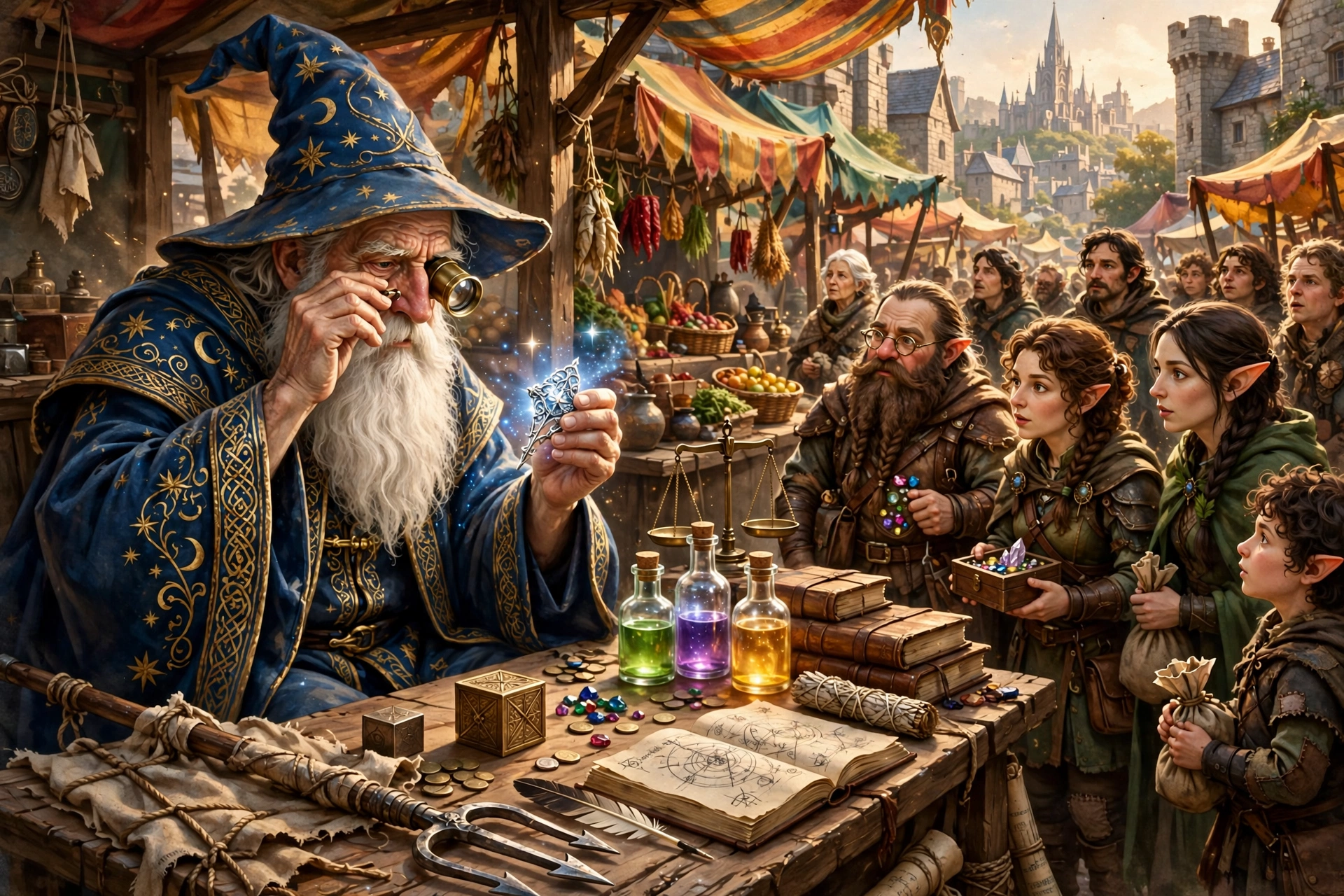

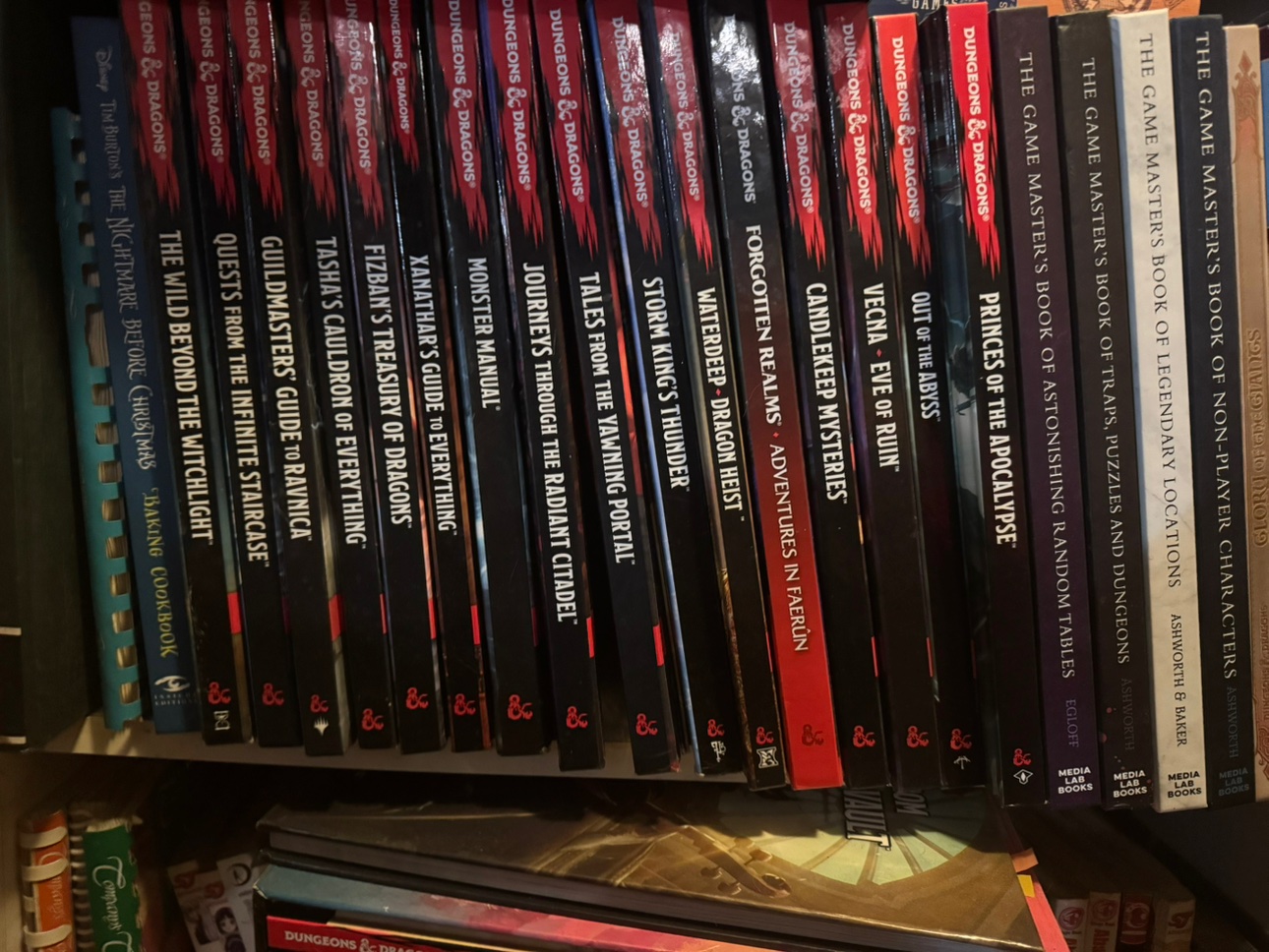
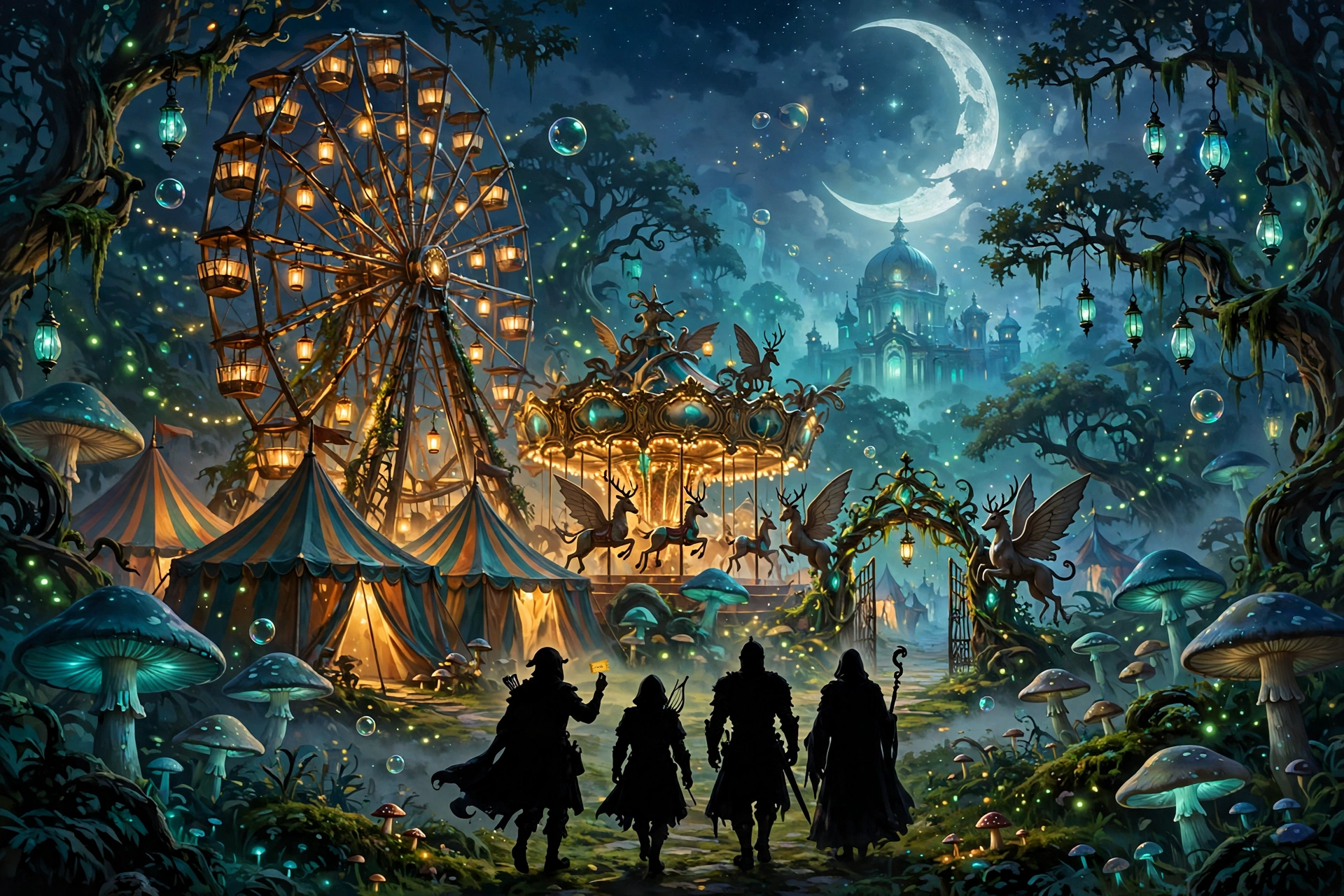 ★ Starting here — review started
Original feature illustration